Ticks
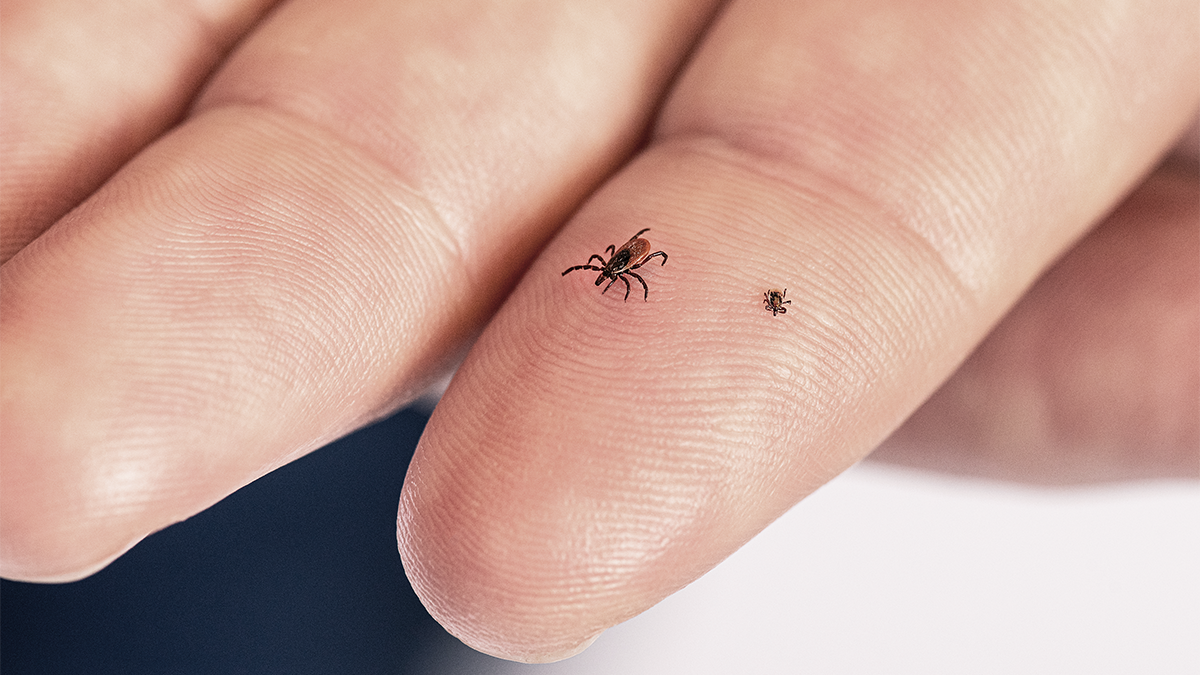

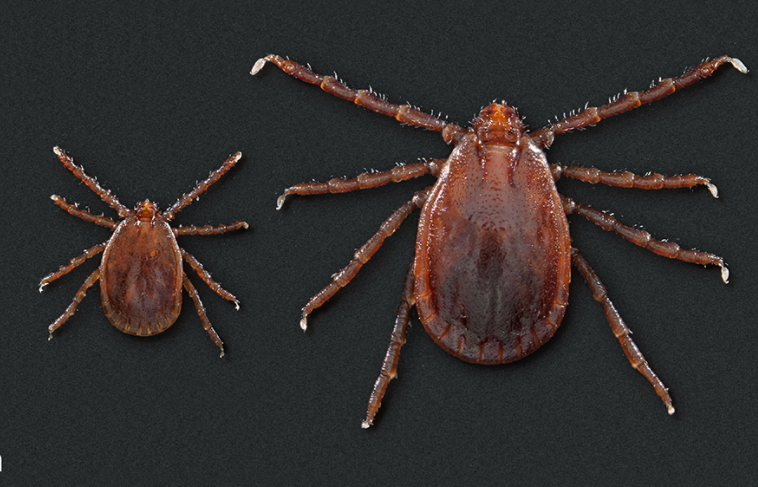
Ticks are seen by most people as dangerous pests that carry disease; however, they are part of the ecosystem. Ticks serve as food for other animals (mice and squirrels), birds (ducks, chickens, turkey, guinea, woodpeckers), insects/arachnoids (ants, praying mantis and spiders), and amphibians/reptiles (frogs and lizards) https://ticksafety.com/about-ticks/why-do-ticks-exist/. By serving as a food source there is also a risk the tick may be infected with a disease which can infect humans, animals and/or birds.
Ticks are thought to be about 90-100 million years old and through evolution they haven’t really changed. There are over 700 different types of ticks throughout the world. Ticks have four stages during their lives: egg, larva, nymph and adult (see table below) Ticks and Disease in Kentucky | Entomology. Depending on the tick species they can live anywhere from 1-3 years. Some ticks live on one animal their whole life (one-host), others need 2 separate mammals/birds to complete their life cycle (two-hosts) and other ones need 3 separate mammals/birds to complete their life cycle (three-hosts). Ticks can survive cold temperatures by going into a type of hibernation; however, when a warm day occurs, they can ‘wake up’ and start searching for a host. A warmer winter can shorten the life cycle of the tick by sometimes up to a year. Because they can survive cold weather you should always be aware if you are in an area where ticks can be found Getting “Ticked Off” with Ticks | USDA.
| Stage | Days | Blood Meal to Survive | Days Feeding |
|---|---|---|---|
| Egg | 19-60 | No | |
| Larva | Up to 240 | Yes | 3-9 |
| Nymph | Up to 6 months | Yes | 4-9 |
| Adult | Up to 18 months | Yes | 6-50 |
The saliva of ticks contains an anticoagulant allowing it to continue feeding for long periods of time. They also secrete an anti-inflammatory which ‘blocks’ the host from mounting an inflammatory response, this is why many people are unaware they have been bitten. Red meat allergy, also known as Alpha-gal syndrome, is a reaction that can occur after being bitten by a tick (usually Lone Star tick) followed by the ingestion of red meat or its’ by-products by the human host. A reaction can be anywhere from mild to life-threatening. This is an allergic reaction to eating red meat and its’ by-products but initiated by the bite/attachment of the tick.
They typically can be found in dense forests mainly on the ground amongst the leaves and sticks, dense brush areas, and the intersection of the forest and grass areas. Ticks tend to wait for an unsuspecting host at the tip of grass or leaves (where it can be off the ground and reach for a host) and attach to the host as they walk by. This is called questing. Ticks like to be in shaded areas out of the hot sun. To decrease ticks in your yard, keep it mowed, clear brush and if you live by an open area/forest, have a wide area cleared as a buffer zone between your lawn and the forest. When hiking, stay on the trail, tuck your pants into your socks, wear light clothes to see ticks, protect yourself with approved tick repellents, such as Deet or other recommended repellents here.
The following ticks can be found in Kentucky, and they can all transmit diseases to humans and animals:
| Name | Human Diseases | Animal Diseases |
|---|---|---|
| Asian Longhorned Tick | Unknown | Theileria |
| Lone Star Tick | Ehrlichiosis, Heartland virus, Alpha-gal (red meat allergy), Rocky Mountain Spotted Fever, Tularemia, Southern tick-associated rash illness (STARI) | Ehrlichiosis, Rocky, Mountain Spotted Fever, Tularemia |
| American Dog Tick | Rocky Mountain Spotted Fever, Tularemia | Rocky Mountain Spotted Fever, Tularemia |
| Blacklegged Tick | Anaplasmosis, Babesiosis, Lyme Disease, Powassan Virus, Relapsing Fever | Anaplasmosis, Babesiosis, Lyme Disease |
| Winter Tick | None | None |
| Brown Dog Tick | Rocky Mountain Spotted Fever | Canine Babesiosis and Ehrlichiosis, Rocky Mountain Spotted Fever |
| Gulf Coast Tick | Rickettsia parkeri (form of spotted fever similar to Rocky Mountain Spotted Fever) |
Between May 2010 and July 7, 2025, there were 139/877 (15.85%) positive cases of tick-borne disease in dogs tested at the University of Kentucky Veterinary Diagnostic Laboratory Home | University of Kentucky Veterinary Diagnostic Laboratory. The number of tick diseases is probably much higher, since this data is from only one source, many private veterinary clinics can do a blood test and check for these diseases at their clinic or send off blood to be tested by other laboratories IDEXX 4Dx Plus Test | Vector-borne disease diagnostics - IDEXX US. Data for dogs in Kentucky (Companion Animal Parasite Council | Parasite Prevalence Maps) shows there were over 7400 cases of Lyme disease diagnosed (4.3%)*, approximately 1900 cases of Anaplasmosis (1.1%) and over 12,000 cases of Ehrlichiosis (7.3%) in 2024. In 2025 an estimated 5% of dogs tested (~7634) were seropositive for Lyme Disease, over 11,400 seropositive for Ehrlichiosis (7.5%) and over 1,600 seropositive for Anaplasmosis (1.1%) Companion Animal Parasite Council | Home. A Lyme vaccine for dogs was released at the beginning of 2016; there is no vaccine for any other VBD for dogs. The number of positives continues to increase every year. This is why it is so important to have your pets on some form of preventative.
The University of Kentucky Department of Entomology provides a service to Kentuckians concerned with tickborne illness, the Kentucky Tick Surveillance Project. Residents of the state can send ticks for identification. Information about submitting the specimens can be found on the website.
*Estimated percent of positive from total available test in the state